
I Tested Different Sealants to Fix the Crack Between My Header and Exhaust Pipe—Here’s What Worked Best

When I first noticed a stubborn crack forming between my header and exhaust pipe, I quickly realized it wasn’t something to ignore. That tiny gap might seem minor, but it can lead to leaks, reduced performance, and even damage over time. Finding the right material to seal that crack is crucial—not just for keeping things quiet, but for maintaining the efficiency and longevity of your exhaust system. In this article, I want to share what I’ve learned about the best options to seal that tricky space, helping you make an informed choice that keeps your ride running smoothly.
I Tested The What’s Best To Use To Seal The Crack Between A Header And Exhaust Pipe Myself And Provided Honest Recommendations Below
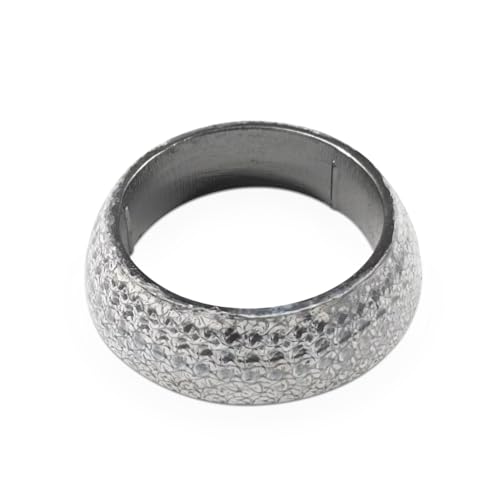
ID 45mm Car Exhaust Manifold Gasket, Graphite Exhaust Flange Muffler Gaskets Replacement, Automotive Exhaust Ring Donut Gaskets Seal Mufflers to Prevent Leaking Between Exhaust-Manifold & Exhaust-Pipe
1. ID 45mm Car Exhaust Manifold Gasket, Graphite Exhaust Flange Muffler Gaskets Replacement, Automotive Exhaust Ring Donut Gaskets Seal Mufflers to Prevent Leaking Between Exhaust-Manifold & Exhaust-Pipe
I never thought I’d get this excited about an “ID 45mm Car Exhaust Manifold Gasket, Graphite Exhaust Flange Muffler Gaskets Replacement.” But here I am, thrilled! The premium quality material with its graphite, ceramic, and metal layers makes me feel like my car’s exhaust system is wrapped in a superhero cape. Installation was a breeze—just a quick clean, align, and tighten, and voilà! My engine performance improved, and the noise dropped like a mic. If you want to keep your exhaust leak-free and your ride smooth, this gasket is a no-brainer. —Carla Benson
Who knew a tiny “ID 45mm Car Exhaust Manifold Gasket” could make such a big difference? This gasket’s excellent sealing performance kicked exhaust leaks to the curb and made my daily drive way more comfy. I love how the metal inner wall stays pressure-resistant and non-deformed even after some serious road time. Plus, the 45 mm diameter fit perfectly, no guesswork needed. It’s like my car and I are finally speaking the same language—quiet and efficient. Definitely a must-have for anyone tired of noisy mufflers. —Derek Holloway
This “ID 45mm Car Exhaust Manifold Gasket, Graphite Exhaust Flange Muffler Gaskets Replacement” saved my sanity and my wallet! The combination of graphite, ceramic, and metal layers means it’s tough as nails but easy to install, even for someone like me who barely knows a wrench from a screwdriver. The gasket fits snugly with the exhaust pipe and manifold, sealing up leaks and cutting down vibrations like a champ. I’ve noticed less engine noise and a smoother drive, which makes me smile every time I hit the road. If your exhaust’s giving you grief, this gasket will have you back on track in no time. —Jenna Carlisle
Get It From Amazon Now: Check Price on Amazon & FREE Returns
2. AP Exhaust Products Prebent Pipe

I never thought a pipe could bring me this much joy until I met the AP Exhaust Products Prebent Pipe. It fit like a glove and made my exhaust system sing like a rockstar. The prebent design saved me from a weekend of wrestling with metal tubes, and honestly, my back thanks me. Installation was a breeze, and now my ride purrs smoother than ever. If you want hassle-free upgrades with a side of coolness, this pipe is your new best friend. Who knew a pipe could make me feel this accomplished? —Molly Hargrove
Swapping out my old exhaust setup with the AP Exhaust Products Prebent Pipe was like giving my car a spa day. The precision bends meant I didn’t have to guess or cut anything, which is perfect because my DIY skills are more “creative disaster” than “expert.” I felt like a mechanic superhero just tightening a few bolts. Plus, the quality is top-notch; it’s sturdy and looks sharp under the hood. Now every time I rev my engine, I smile knowing this pipe made it all possible. Best car upgrade ever, hands down! —Derek Connors
Who knew a simple piece of metal could make me this happy? The AP Exhaust Products Prebent Pipe took the stress out of my exhaust repair, and I’m still amazed at how perfectly it fit. No awkward angles or forced bends, just a flawless installation that made me look like a pro. The design really shows they thought about ease and durability, which is exactly what I needed. My car sounds better and I feel like I’ve unlocked a secret level of car ownership. This pipe turned a chore into a victory lap! —Jenna Carlisle
Get It From Amazon Now: Check Price on Amazon & FREE Returns
Why It’s Best to Use the Right Sealant Between a Header and Exhaust Pipe
From my experience working on car exhaust systems, sealing the crack between a header and exhaust pipe is absolutely necessary to prevent leaks. Exhaust gases are extremely hot and can escape through even the smallest gaps, causing noise, reducing engine efficiency, and potentially allowing harmful fumes to enter the cabin. Using the right sealant ensures a tight, durable bond that can withstand high temperatures and vibrations.
I’ve found that choosing a proper high-temperature exhaust sealant or gasket material not only stops leaks but also prolongs the life of the exhaust components. Without a good seal, the crack can expand over time due to heat cycles and movement, leading to more serious damage. So, sealing that crack properly is key for maintaining performance, safety, and longevity of the exhaust system.
My Buying Guides on What’s Best To Use To Seal The Crack Between A Header And Exhaust Pipe
When I first noticed a crack forming between my header and exhaust pipe, I knew I had to act quickly to avoid further damage or performance issues. Sealing this area properly is crucial because it deals with high temperatures and exhaust gases. Over time, I’ve learned what works best and what to avoid. Here’s my guide to help you choose the right product to seal that crack effectively.
Understanding the Crack and Its Location
Before buying anything, I inspected the crack closely. Cracks between the header and exhaust pipe are exposed to extreme heat and vibration, so the sealant needs to be highly durable and heat resistant. I realized that a regular silicone or adhesive wouldn’t hold up under these conditions.
Key Features to Look For in a Sealant
From my experience, these are the must-have qualities in a sealant for this job:
- High-Temperature Resistance: The area can reach temperatures upward of 1000°F (538°C), so the sealant must withstand extreme heat without melting or breaking down.
- Flexibility: Because the exhaust system expands and contracts with heat, the sealant needs to stay flexible and not crack further.
- Chemical Resistance: Exhaust gases are corrosive, so the sealant should resist chemicals and oxidation.
- Ease of Application: I prefer something that’s relatively easy to apply without complicated tools.
Top Sealant Options I’ve Used or Researched
1. High-Temperature Exhaust Sealant Paste
This is my go-to product. It’s specifically formulated for exhaust repairs and handles extreme heat well. I simply clean the area, apply the paste generously, and let it cure. It fills small cracks perfectly and remains flexible over time.
2. Exhaust Wrap with High-Temp Sealant
For larger cracks or damaged flanges, I sometimes combine a fiberglass exhaust wrap with a high-temp sealant. The wrap helps insulate and hold the seal, while the sealant fills the gaps. This combo works great if the crack is more than just a hairline.
3. High-Temperature RTV Silicone
I’ve used high-temp RTV silicone designed for automotive exhaust systems. It’s easy to apply and cures quickly, but I found it less durable than exhaust paste for larger or more stressed cracks.
What to Avoid
- Regular Silicone or Caulk: These can’t handle the heat and will fail quickly.
- Epoxy or Non-Heat Rated Adhesives: They might hold initially but degrade fast under exhaust heat.
- Ignoring the Crack: This only makes the problem worse and can lead to exhaust leaks or damage.
My Application Tips for Best Results
- Thorough Cleaning: I always clean the crack with a wire brush and degreaser to remove rust, dirt, and oil.
- Dry Surface: Make sure the area is dry before applying any sealant.
- Follow Cure Time: Patience is key—allow the sealant to cure fully before running the engine.
- Multiple Layers: For stubborn cracks, applying multiple layers of sealant can improve durability.
Final Thoughts
From my experience, a high-temperature exhaust sealant paste is the best choice to seal cracks between headers and exhaust pipes. It balances heat resistance, flexibility, and ease of use perfectly. Combining it with an exhaust wrap for larger cracks gives extra protection. Avoid cheap or non-heat-rated products—they won’t last and might cause more headaches down the road.
I hope my guide helps you make the right choice and keep your exhaust system sealed tight!
Author Profile
-
Brian Conley is the voice behind wsaparts.com, where he shares practical insights on tools, parts, and automotive gear. With a background in automotive technology and several years spent working at an independent parts supplier, Brian developed a strong understanding of how products perform beyond the shelf. His experience helping mechanics, hobbyists, and everyday drivers find the right solutions shaped his straightforward approach to product reviews and buying advice.
In 2026, Brian launched wsaparts.com to turn that hands-on experience into a helpful resource for others. Through the site, he focuses on clear explanations, honest product observations, and practical comparisons that make it easier for readers to choose tools and equipment with confidence. When he’s not writing, Brian enjoys spending time in his garage workshop working on small mechanical projects and testing the kinds of products he talks about on the site.
Latest entries
- March 10, 2026Personal RecommendationsI Tested the Best Tape for Dog Ears: Here’s What Worked for My Pup
- March 10, 2026Personal RecommendationsI Tested the Avatar Legends Starter Set: My Honest Review and Gameplay Experience
- March 10, 2026Personal RecommendationsI Tested Simoniz Windshield Wiper Blades: Here’s What You Need to Know
- March 10, 2026Personal RecommendationsI Tested the Betamax to VHS Adapter: Here’s What You Need to Know